
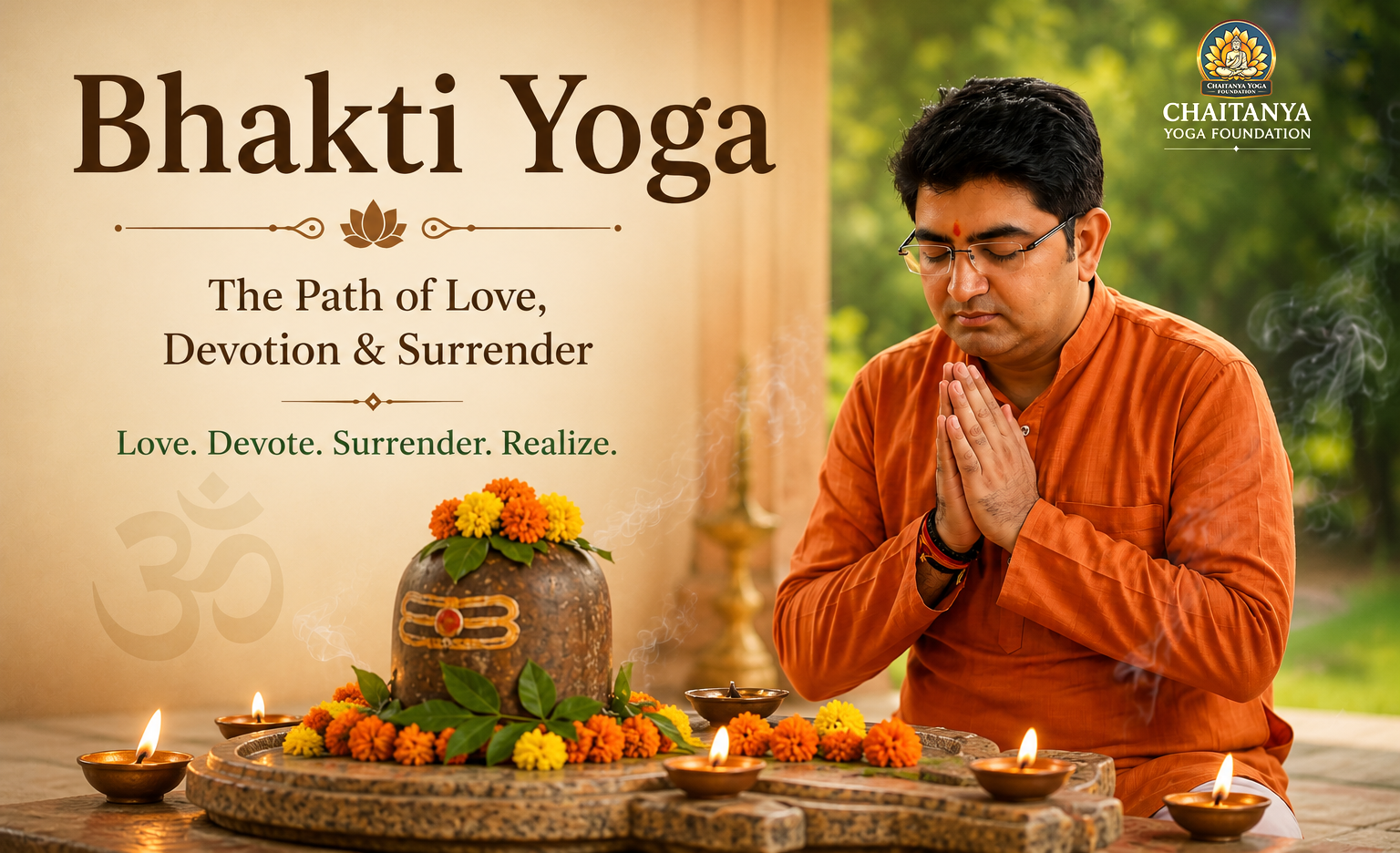
Bhakti Yoga: The Path of Devotion
Sawan is traditionally regarded as a month of devotion, especially devotion to Lord Shiva. For many, it is a time of prayer, worship, fasting, chanting, and inward reflection. But from the perspective of yoga, Sawan also invites us to ask a deeper question: What does devotion truly mean?
This question leads us to Bhakti Yoga, the path of devotion and divine love.
What Is Bhakti Yoga?
Bhakti Yoga is the path of cultivating love, reverence, surrender, and a deeper relationship with the Divine. It is not merely an expression of emotion or sentiment. In the yogic tradition, Bhakti is understood as a disciplined way of purifying the heart, directing the mind toward the Divine, and gradually moving beyond the limitations of the ego.
Through intense love and devotion, the mind becomes more focused, the heart becomes more open, and the seeker moves toward a deeper experience of the Divine.
Sakamya and Nishkamya Bhakti
Bhakti can be understood in different ways. One important distinction is between Sakamya Bhakti and Nishkamya Bhakti.
Sakamya Bhakti is devotion motivated by a particular desire or personal gain. A person may pray for wealth, good health, success, relief from difficulties, or the fulfillment of a particular ambition. Such devotion is natural, especially in the early stages of spiritual life, because people often turn toward the Divine in times of need.
However, the deeper aim of Bhakti Yoga is Nishkamya Bhakti—devotion without selfish expectation.
In Nishkamya Bhakti, one does not approach God merely to obtain something in return. Instead, devotion itself becomes the aspiration. The seeker learns to cultivate gratitude, contentment, surrender, and trust in the Divine.
Rather than constantly asking, “What can God give me?”, the devotee gradually moves toward, “How can I offer myself to God?”
This transformation purifies the heart and prepares the seeker for deeper spiritual realization.
Apara-Bhakti and Para-Bhakti
Another traditional distinction is between Apara-Bhakti and Para-Bhakti.
Apara-Bhakti may be understood as devotion in its more external and personal forms. A devotee may worship a chosen form of the Divine, offer flowers and food, light a lamp, ring a bell, chant mantras, observe rituals, and participate in ceremonies. These practices provide the mind with a tangible focus and help establish a personal relationship with the Divine.
Such practices should not be dismissed as merely external rituals. For a beginner, they can be powerful means of cultivating concentration, reverence, discipline, and love.
As devotion deepens, however, the devotee’s understanding gradually expands. The Divine is no longer experienced as confined to one image, place, or form. The seeker begins to perceive the Divine presence everywhere.
This deeper state is described as Para-Bhakti, the highest expression of devotion.
The devotee begins to see the Divine in all beings and throughout the entire universe. Worship is no longer limited to a particular ritual or place; life itself becomes an offering.
A simple way to cultivate this attitude is to practice remembrance throughout daily life. Before eating, one can mentally offer the food to the Divine. While walking through a garden, one can inwardly offer its beauty and flowers to God. In this way, ordinary experiences gradually become opportunities for worship.
The distinction between devotion and knowledge also becomes less rigid at this stage. When the devotee sees the Divine everywhere, the vision of Bhakti and Jnana begins to converge.
Bhavas in Bhakti
As devotion deepens, it can give rise to Bhava—a profound devotional feeling or inner relationship with the Divine.
Bhava allows the devotee to relate to God in a deeply personal way. In the Bhakti tradition, this relationship may be expressed through different attitudes, such as that of a servant, friend, child, or beloved.
As devotion becomes increasingly intense, the devotee may experience Maha-Bhava, a state of profound absorption in divine love. The distinction between the devotee and the object of devotion becomes increasingly subtle, and love itself becomes the center of spiritual life.
This supreme love is often described as Parama-Prema—the highest or consummate form of divine love.
The Nine Forms of Bhakti
The Srimad Bhagavata and other traditional texts describe nine principal forms of devotion, commonly known as Navadha Bhakti:
| Shravana | — hearing the names, teachings, stories, and glories of the Divine. |
| Kirtana | — singing or chanting the glories of the Divine. |
| Smarana | — remembering the Divine name and presence. |
| Padasevana | — serving the Divine with humility and reverence. |
| Archana | — worship through offerings and ritual. |
| Vandana | — prayer, reverence, and prostration before the Divine. |
| Dasya | — cultivating the attitude of a servant of God. |
| Sakhya | — cultivating a loving relationship of friendship with the Divine. |
| Atmanivedana | — complete surrender of oneself to the Divine. |
These forms are not necessarily separate stages. A devotee may practice several of them according to temperament, circumstance, and spiritual inclination.
The Fruits of Bhakti
One of the most transformative aspects of Bhakti is its effect on the heart.
As devotion grows, qualities such as jealousy, hatred, anger, pride, arrogance, and excessive attachment gradually lose their hold. In their place arise love, humility, compassion, peace, joy, and inner contentment.
Bhakti does not simply ask a person to suppress negative qualities. Instead, it gradually transforms the inner orientation of the person. When the heart becomes absorbed in love of the Divine, there is less space for the ego-driven tendencies that create inner conflict.
The Bhakta learns to approach life as an offering. Actions are performed with the intention of pleasing the Divine, while actions that are understood to be contrary to that ideal are gradually abandoned.
In this sense, Bhakti itself becomes a form of self-correction. Rather than relying only on forceful self-discipline, the devotee allows love to become the source of discipline.
Bhakti as a Way of Life
The deeper message of Bhakti Yoga is that devotion need not remain confined to a temple, prayer room, ritual, or particular season.
It can enter every aspect of life.
Eating can become an offering. Work can become service. Remembering the Divine can become a daily practice. Helping another person can become an expression of devotion. Even the simple act of appreciating nature can become an opportunity to recognize the presence of the Divine.
This is where Bhakti moves beyond ritual and becomes a way of living.
Sawan, therefore, can be more than a month of special worship. It can become an invitation to rediscover the meaning of devotion—to move from asking for things from the Divine toward offering ourselves to the Divine, from seeing God in one sacred form toward recognizing the sacredness of life itself.
Bhakti Yoga is the journey from devotion as an act to devotion as a state of being—from prayer and worship to love, surrender, and the recognition of the Divine everywhere.
Leave a Reply