
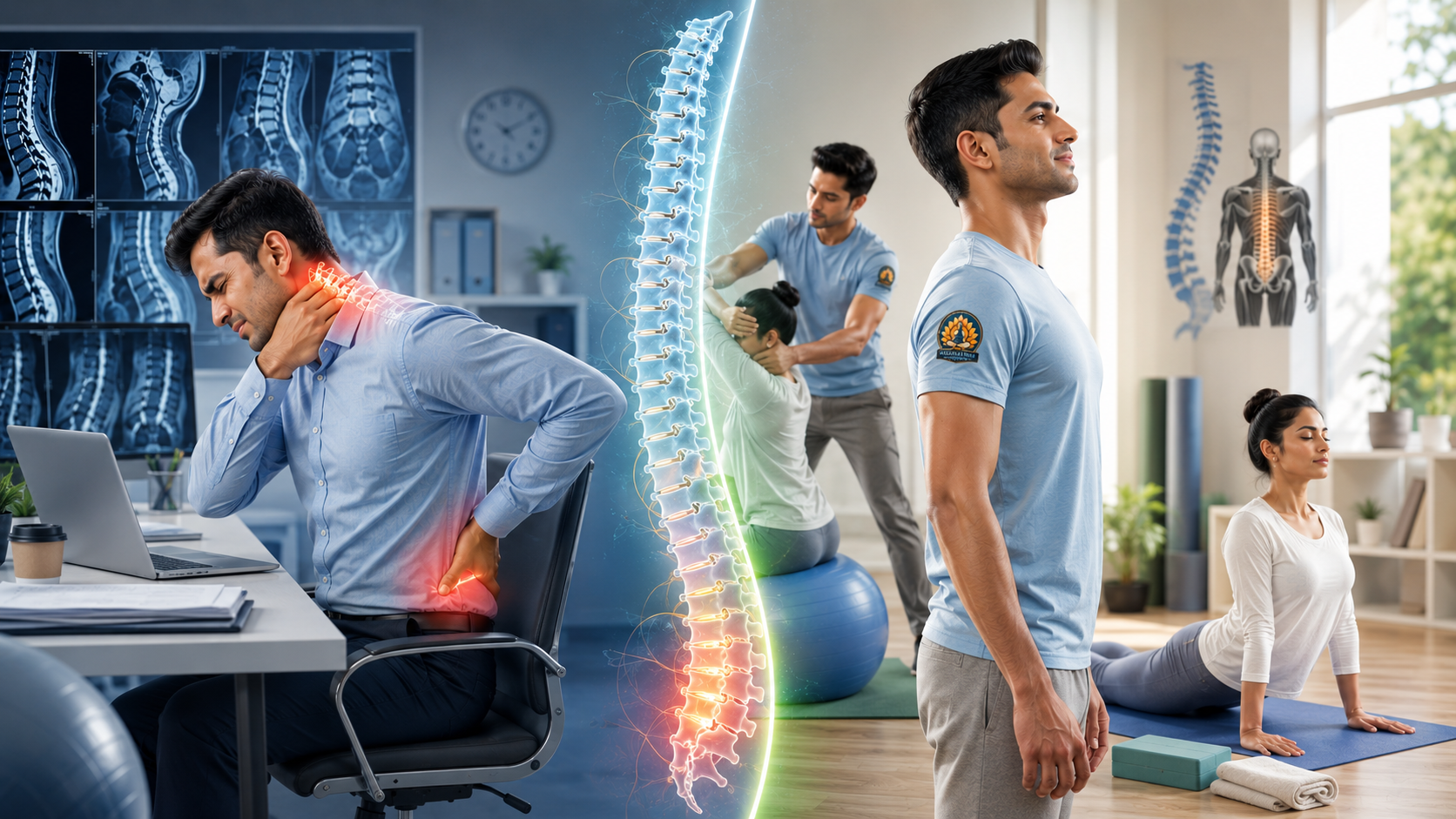
Have you ever woken up with a stiff neck and assumed it was simply because you slept in the wrong position? A hot shower, a few stretches, and the discomfort seems to disappear. But then it returns a few days later. You promise yourself that you’ll rest over the weekend, yet the weeks turn into months, and the pain slowly becomes part of your daily life.
You find yourself constantly rubbing your neck during work, changing pillows, buying ergonomic chairs, using pain-relief sprays, or taking medications for temporary relief. Some people even visit a physiotherapist or begin practicing yoga. Although these approaches often reduce pain, the symptoms may return if the underlying cause is never addressed.
The most important thing to understand is that neck and back pain are symptoms, not diseases. Pain is your body’s way of signaling that something needs attention. The actual cause may be poor posture, muscle weakness, prolonged sitting, stress, spinal degeneration, nerve compression, disc problems, inflammatory diseases, or years of repetitive movement patterns that gradually overload the spine.
Why Understanding the Cause Matters
Many spinal conditions produce similar symptoms such as pain, stiffness, tingling, numbness, headaches, muscle spasms, or reduced mobility. However, similar symptoms do not always mean the same diagnosis.
For example, a simple muscle strain may improve with gentle stretching and strengthening exercises, whereas a herniated disc or nerve compression may worsen if inappropriate movements are introduced too early. Likewise, inflammatory disorders such as Ankylosing Spondylitis require a completely different treatment approach than age-related spinal degeneration.
This is why every person experiencing persistent neck or back pain should aim to understand the underlying medical condition rather than treating pain alone.
Common Causes of Neck and Back Pain
Several factors contribute to spinal pain, including:
- Poor posture while using computers or mobile phones
- Long hours of sitting
- Weak core and postural muscles
- Repetitive movements
- Incorrect lifting techniques
- Age-related degeneration
- Disc bulges or herniation
- Nerve compression
- Road traffic accidents and sports injuries
- Autoimmune and inflammatory disorders
- Osteoporosis and other systemic diseases
Without addressing these contributing factors, pain often returns even after temporary relief.
The Role of Physiotherapy
Physiotherapy plays a crucial role in assessing movement, restoring function, and reducing pain. Physiotherapists evaluate posture, muscle strength, joint mobility, flexibility, balance, and movement patterns to identify the mechanical causes of pain.
Treatment may include manual therapy, therapeutic exercises, posture correction, ergonomic advice, strengthening programs, gait training, and pain management techniques. Physiotherapy is particularly valuable during the early stages of injury, after surgery, following trauma, or when restoring movement after prolonged pain.
Rather than simply reducing symptoms, physiotherapy aims to improve function, prevent recurrence, and help individuals return safely to their daily activities.
The Role of Yoga Therapy
Yoga therapy is much more than performing stretches or difficult postures. When applied therapeutically, it is an individualized approach that uses movement, breathing techniques, relaxation, meditation, and body awareness to support recovery.
Yoga therapy can help:
- Improve posture and spinal alignment
- Increase flexibility and mobility
- Strengthen supporting muscles
- Improve breathing patterns
- Reduce muscle tension
- Enhance body awareness
- Improve balance and coordination
- Reduce stress and anxiety
- Support better sleep
- Improve confidence in movement
Because chronic pain often affects both the body and the mind, yoga also helps regulate the nervous system through controlled breathing and relaxation practices. This reduces muscle guarding, decreases pain sensitivity, and promotes emotional well-being.
However, yoga therapy requires consistency and should progress gradually through phases of pain relief, mobility restoration, strengthening, and long-term maintenance.
Not Every Condition Is Suitable for the Same Yoga Practice
One of the biggest misconceptions is that every type of back or neck pain can be treated with the same yoga routine.
In reality, yoga recommendations depend on the diagnosis.
Conditions such as muscle strain, mechanical low back pain, rounded shoulders, and mild postural dysfunction often respond very well to appropriately prescribed yoga therapy.
Other conditions—including cervical spondylosis, disc bulges, sciatica, and lumbar spondylosis—can benefit from yoga but require significant modifications and careful progression.
More serious conditions such as herniated discs, spinal stenosis, severe scoliosis, Ankylosing Spondylitis, recent trauma, fractures, or progressive neurological symptoms require close medical supervision before beginning therapeutic yoga.
Aggressive stretching or advanced postures performed without understanding the diagnosis may aggravate symptoms rather than improve them.
Why Medical Diagnosis Is Essential
A yoga practitioner or fitness instructor should never attempt to diagnose spinal disorders independently. Many serious conditions cannot be identified through observation alone.
Medical investigations provide essential information about the spine.
X-rays help identify spinal alignment, degeneration, fractures, scoliosis, kyphosis, and other structural abnormalities.
MRI scans reveal discs, nerves, ligaments, soft tissues, disc bulges, herniations, and nerve compression, making them invaluable for conditions such as sciatica, radiculopathy, and disc prolapse.
Blood investigations may be necessary when inflammatory or autoimmune disorders are suspected.
Understanding these reports allows healthcare professionals and yoga therapists to determine safe movements, identify contraindications, and plan appropriate rehabilitation.
The Importance of Medical Clearance
Certain conditions require approval from a qualified medical professional before beginning yoga therapy.
These include:
- Recent spinal surgery
- Severe osteoporosis
- Disc prolapse
- Progressive neurological weakness
- Autoimmune spinal disorders
- Recent fractures
- Severe scoliosis
- Spinal stenosis
Medical clearance protects patient safety, reduces the risk of worsening an existing condition, and encourages collaboration between doctors, physiotherapists, and yoga therapists.
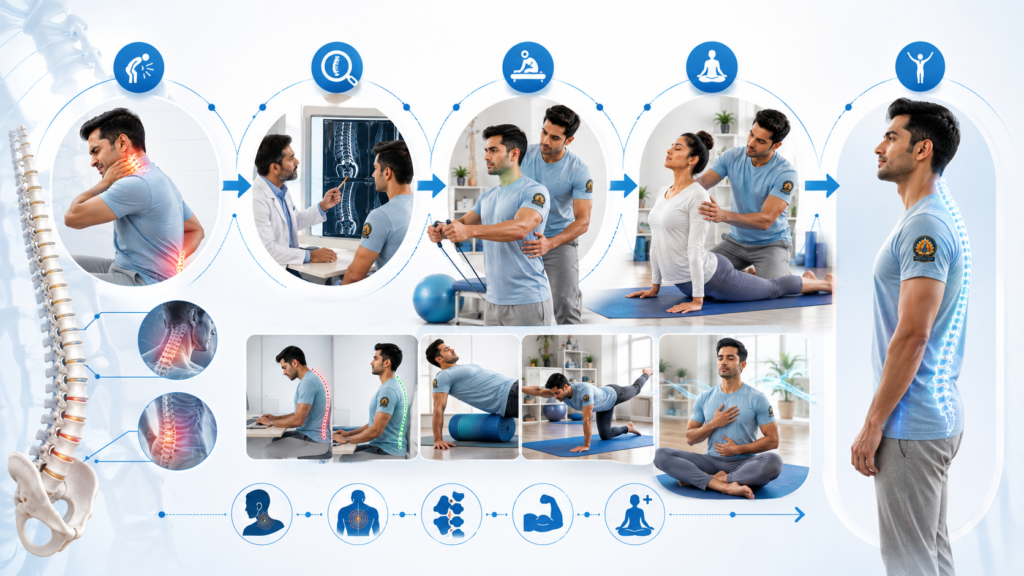
How Physiotherapy and Yoga Work Together
Many people mistakenly believe they must choose either physiotherapy or yoga. In reality, the two approaches complement each other extremely well.
Physiotherapy focuses on diagnosis, pain management, restoring movement, muscle activation, and functional rehabilitation based on clinical assessment.
Yoga therapy complements this by improving flexibility, posture, breathing, stress regulation, body awareness, balance, and long-term lifestyle habits that help prevent recurrence.
Together they provide a more comprehensive approach to recovery than either treatment alone. In many cases, physiotherapy helps individuals recover safely during the painful stages, while yoga supports long-term spinal health, resilience, and overall well-being.
Yoga Is Helpful for Medical Care
One of the most important responsibilities of a yoga practitioner is understanding the limitations of yoga therapy.
Yoga should never replace medical diagnosis or emergency treatment. Symptoms such as severe pain after trauma, progressive weakness, numbness, bowel or bladder dysfunction, unexplained weight loss, fever with back pain, or rapidly worsening neurological symptoms require immediate medical evaluation.
Similarly, degenerative conditions cannot be reversed simply through yoga. While yoga may improve flexibility, posture, strength, circulation, pain tolerance, and quality of life, structural degeneration itself often requires ongoing medical management.
Recognizing when to refer a student for medical assessment is a hallmark of responsible yoga therapy.
A Holistic Approach to Recovery
Effective management of neck and back pain requires more than temporary symptom relief. Long-term improvement depends on understanding the diagnosis, correcting contributing factors, improving movement quality, strengthening supporting muscles, reducing stress, and adopting healthier lifestyle habits.
A comprehensive rehabilitation program may include gentle joint loosening exercises, condition-specific yoga postures, breathing techniques, relaxation practices such as Yoga Nidra or Shavasana, meditation, physiotherapy exercises, posture correction, ergonomic improvements, and regular physical activity.
Recovery also depends on consistency, adherence to professional guidance, and realistic expectations. Every individual responds differently based on age, severity of the condition, duration of symptoms, overall health, and commitment to treatment.
Final Thoughts
Neck and back pain should never be ignored simply because they are common. Persistent pain is a signal that deserves proper evaluation. Instead of searching only for temporary relief, focus on understanding the cause behind your symptoms.
Medical diagnosis identifies the condition, physiotherapy restores movement and function, and yoga therapy supports long-term physical and mental well-being. These approaches are not competitors—they are partners in rehabilitation.
When used together and guided by qualified professionals, they offer a safe, evidence-informed, and holistic pathway toward reducing pain, improving mobility, restoring confidence, and helping people return to healthier, more active lives.

Leave a Reply